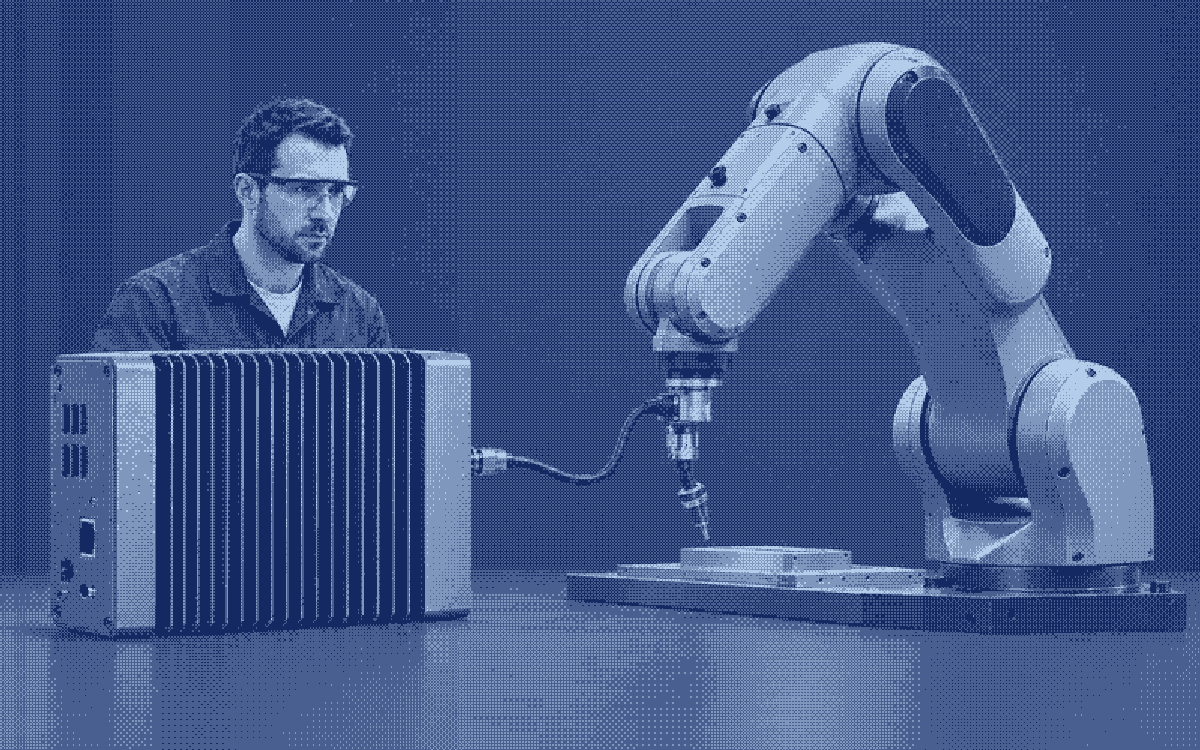
Edge & Physical AI
Bring AI closer to the work happening on site
Run applications and AI close to your teams, devices, and operations. Use Langstack Edge or your own supported hardware. Process data locally and choose which results connect to the rest of your enterprise.
Companies we’ve helped
- Coloplast
- Lokal Forsikring
- 3
- SK Energi
- Mindshare
- Energi Fyn
- Røde Kors
- OK
- Telenor
- Envafors
- Frederikshavn Forsyning
- Vestforsyning
- Andel Energi
- APC Forsikringsmæglere
- Bonnier
- Cognito · Bording Group
- CA a-kasse
- Call me
- Egmont
- Falck
- Læger uden Grænser
- Modstrøm
- Roskilde Kommune
- SEAS-NVE
- Storm Group
- Goodwin Company
- Verisure
- Visma e-conomic
- Dantaxi
- Proactiv





























Built for local AI

Run inference on site
Deploy models close to the images, signals, and events they interpret. Put results within reach of the people and applications that need them.

Shorten the path to a result
Process inputs locally instead of sending every request to a remote service. Build around the response time your operation needs.

Choose what leaves the site
Keep local processing close to your data. Decide which observations, events, or selected records are shared with central systems.

Use the hardware that fits
Start with Langstack Edge or your own supported devices. Match compute, model, and connectivity to the task and the physical environment.

Connect local work to your enterprise
Bring useful results into business applications and workflows through Langstack identities. Give each connection the access its task requires.

Deploy and operate through one platform
Deploy from your editor to connected edge resources. Manage applications and models across sites through Langstack, with deployment, monitoring, and operations in one platform.
Put local AI to work
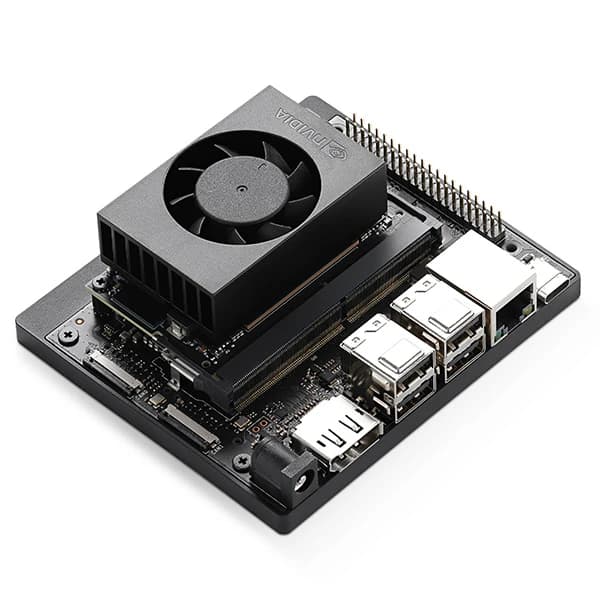
From private workflows in your office to intelligence on the factory floor and in the field. Build with Langstack Edge powered by NVIDIA Jetson, or your own supported devices.
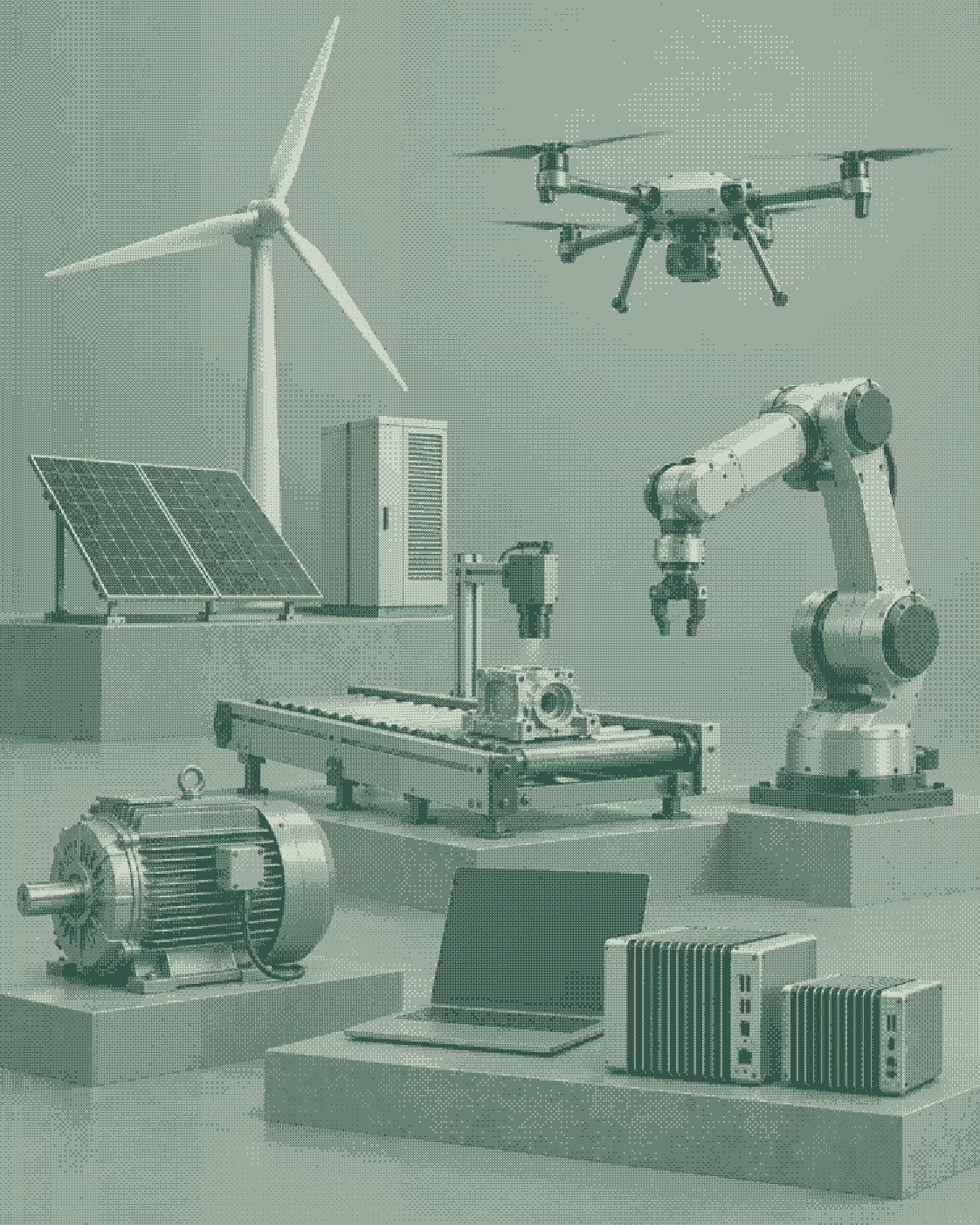
Private AI at work
Run proprietary workflows, document processing, and agents on your own network. Share local AI capacity across teams and applications.
Predictive maintenance
Detect emerging faults in equipment signals. Combine observations with service history to anticipate maintenance and prioritise the next action.
Energy intelligence
Connect measurements and forecasts across wind, solar, batteries, and charging. Decide when to consume, store, or supply energy.
Visual inspection
Inspect products, packaging, and installations with local vision models. Flag defects where teams can investigate and act.
Production intelligence
Reveal process drift, bottlenecks, and waste in machine and sensor data. Help operators improve quality and throughput on site.
Robotics & autonomous systems
Run AI on drones, robots, and connected machines. Process sensor data locally to support inspection, navigation, and task execution.


Deploying AI at the edge
When should AI inference run locally?
Local inference is useful when data should remain on site, the application needs a short response path, or sending every input to a remote service is impractical. Examples include private office workflows, visual inspection, and equipment-signal processing.
Which edge hardware can we use?
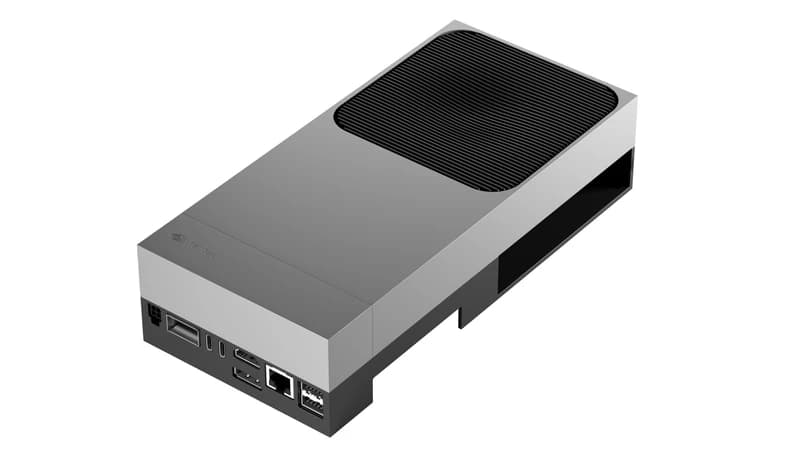
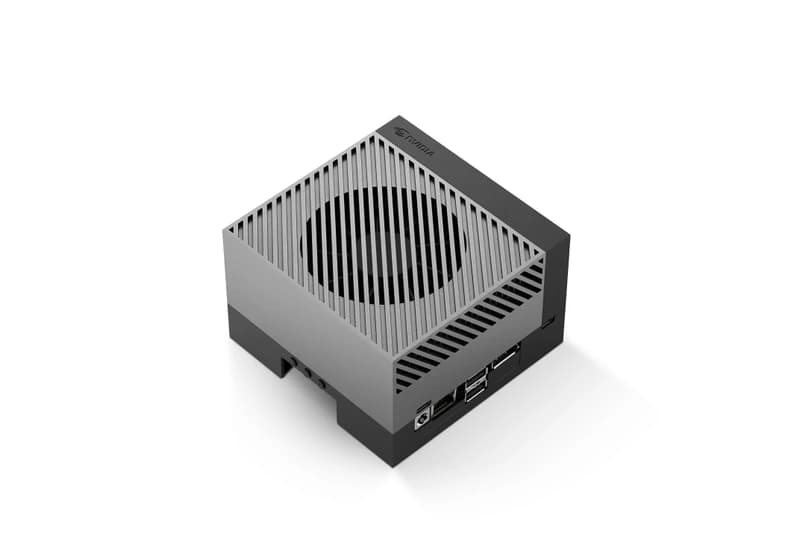
Use Langstack Edge powered by NVIDIA Jetson or your own supported devices. Confirm compatibility against the model, compute and memory requirements, operating environment, and connectivity before choosing hardware.
Can an edge application operate without a network connection?
A locally deployed model can support local processing, but the complete application's behaviour depends on its dependencies. Identify any external APIs, knowledge updates, and management connections it needs, and validate the disconnected workflow before relying on it.
AI infrastructure for robotics and physical systems
Where does Langstack fit in a robotics AI system?
Langstack provides a foundation for deploying and operating AI workloads on supported devices and connecting useful results to enterprise knowledge and applications. A robotics solution also needs the robot's sensors, control software, and task-specific integration; the platform does not replace those components.
Which robotics and physical AI scenarios can we explore?
Examples include visual inspection from a robot or drone, local interpretation of sensor data, and AI assistance for task execution. Model results can feed maintenance or operational workflows.
Explore manufacturing applicationsHow do we define a viable first deployment?
Choose a bounded task and establish the input data, model quality, latency budget, hardware, and failure behaviour. Validate the complete system in its operating environment. Safety-critical control and any required certification must be assessed for that system.
Work with our engineering teamA foundation for Zero Trust
Zero Trust makes access explicit, limited and subject to reassessment. Langstack’s identity and networking controls provide a foundation for applying these principles to applications, models and agents.
Explore Security- Explicit verification
- Verify identities and authorize access to each resource. Reassess access as context and security signals change.
- Least-privilege access
- Grant users, workloads and agents only the access their task requires. An agent’s decision to use a tool does not itself grant permission.
- Assume breach
- Design for the possibility that a workload or identity is compromised. Isolate workloads, limit lateral access, and monitor activity to help contain the impact.

“Some data is truly difficult to work with. With Langstack, we always find a way, even with the most complex sensor data.”
Klaus KellermannArchitect & Client Adviser, Roskilde Kommune
Request a reference call